
Defamiliarization

Last night in a dream my son returned. His hair had grown into a long, thick, wavy mop, the style he had as a kid.
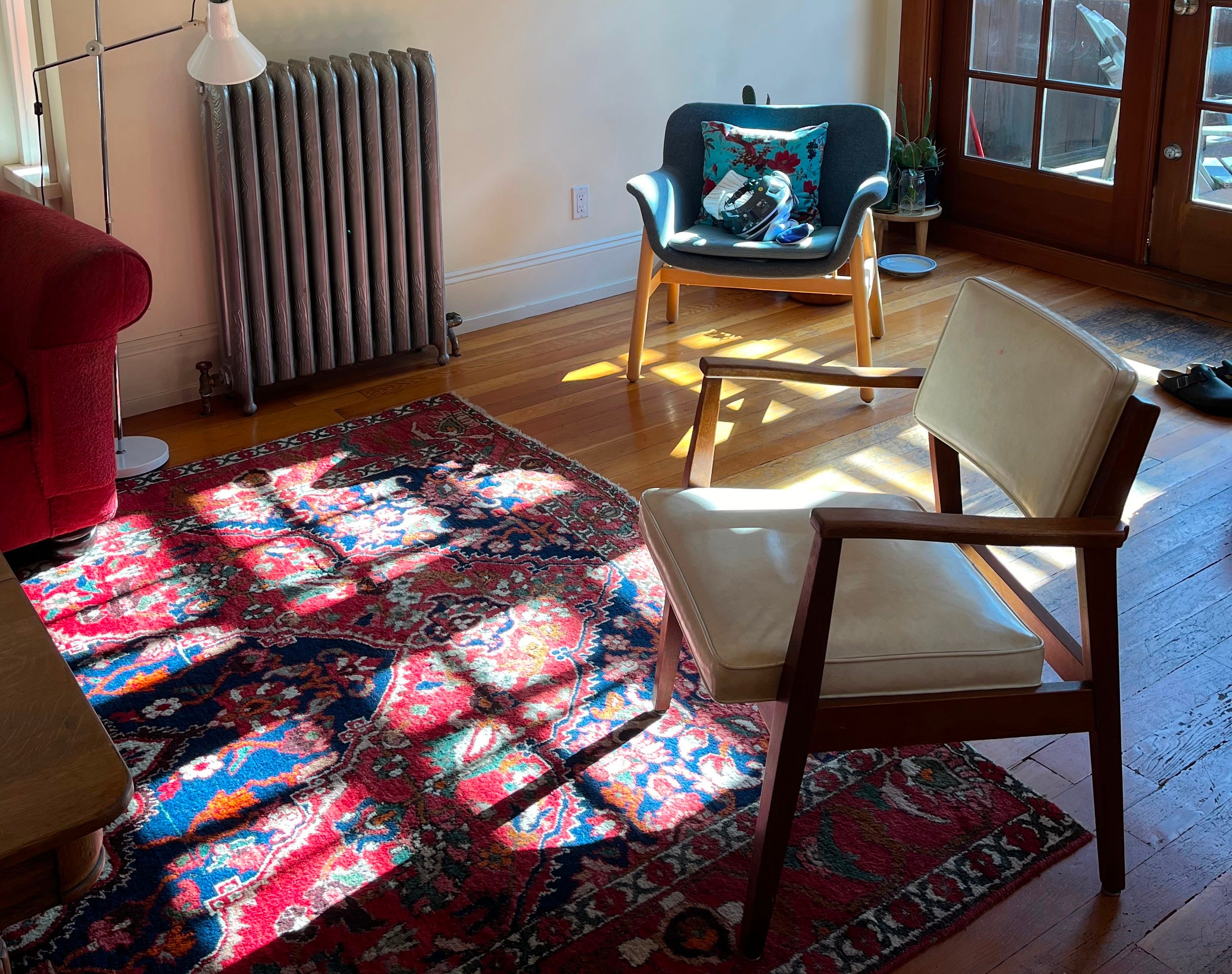
In the dream he was neutral, happy, and without much of a plan. Seems kind of a nice way to be, actually. Me in my curious, quizzing mind as a mom wanted to know his plan, but didn’t quite know how to ask. He stood there in the hallway. Sort of more gentle even than I remember him.
“A house means a family house,” Marguerite Duras says in Practicalities, a formative book in autofiction—a genre shared by Annie Ernaux— where she writes about her life as a woman, as a writer, as a sexual person in France. And about sexism. Sex gets more air time in France because people are direct about it. In my own British influenced upbringing we didn’t talk about sex. It seemed an angry subject. And so I avoided it.
But here I am. I’m a woman whose husband died nearly four years ago. Is he still in the house?
When we started out as a couple I was a new court stenographer and he was a new teacher with the Vancouver School Board. One time, visiting my mother’s apartment in North Vancouver, we walked past a tragical looking mansion—not big, but old. Graceful. Aesthetically on. Grounded. Crinkly glass in windows like river ice faced out into the street. It was painted a colour of greying, weathered wood as though it had aged as far as it could and then stopped. Someone noticed and painted it, reifying it, to prevent it from falling away completely.
“I would work all my life for a house like that,” he said. It meant that he wanted a family. He wanted kids. He wanted me.
As with any long partnership we would get to test what familiarity meant many times. And, after a brief separation, what home meant. In the end he told me: “You’re my home.”
We bought this house 23 years ago. We painted it sand with cream trim. It stayed in this state for a couple of decades and encapsulated my family as it grew up and away. This past September I chose an orangey red with help from a friend and artist I met on Hornby Island years ago. I’m more a smoky blue person or an olive green person. Nothing about me says red up front. Except for this:
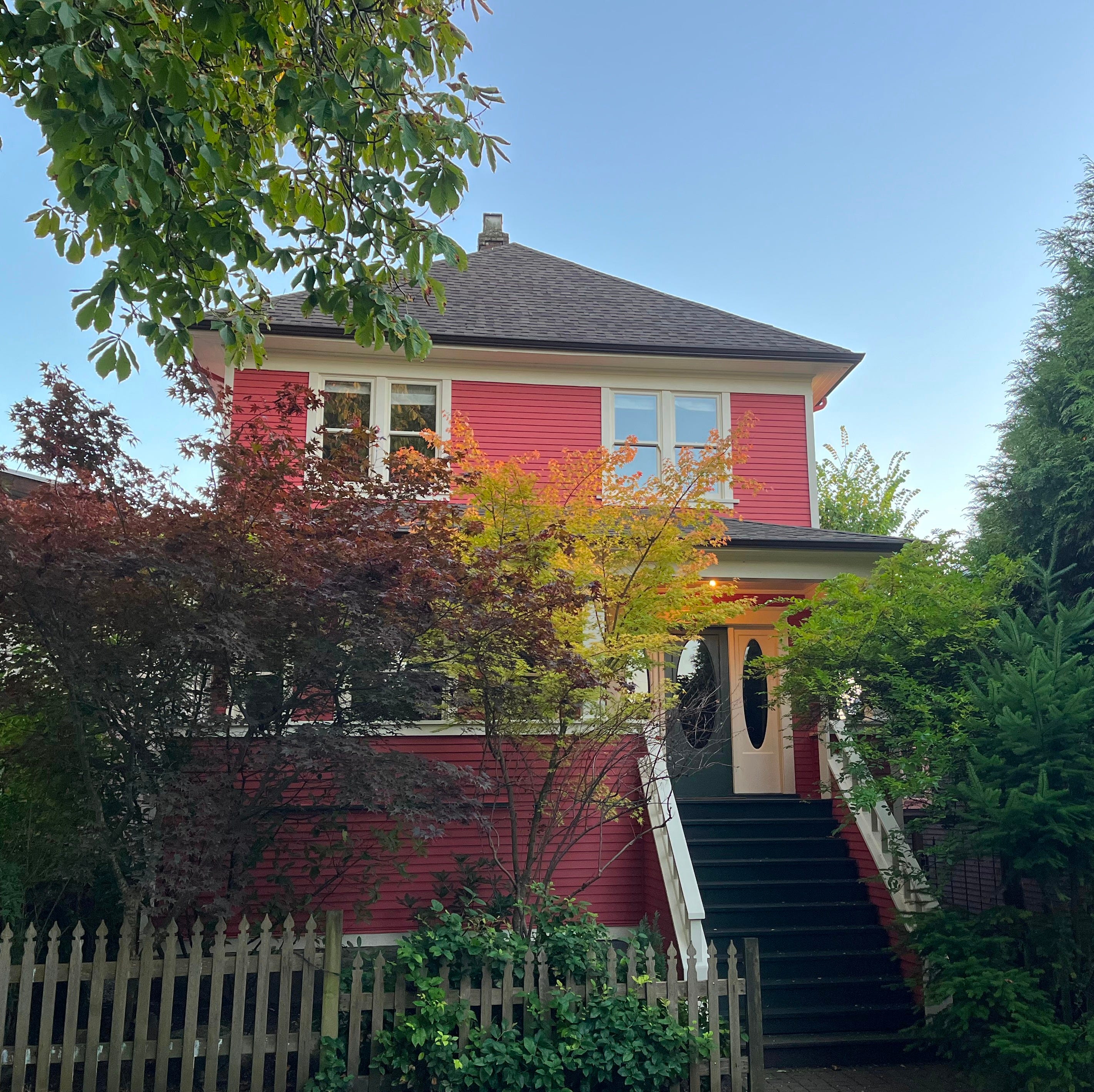
Now at this age I’ve chosen this defamiliarizing colour. My love of the old and what I’ve been given is intact but I’m noticing change. In relations with my kids, for one. In my attitude toward my job, toward lovers and dating. Toward writing. Writing must be freer: “You can tell me anything,” one lover said.
Who am I now? I make the same recipes. But they turn out different. I do the same things somehow. I don’t know how.
My son who appeared in my dream left this September. He’d come home for a few months. Did he come to the house or did he come to me? It’s late October now. His birthday is coming up. Haven’t heard from him. I don’t think he knows about the red. Will it still feel like home for him? Does it feel like home for me? Is this all a long process of letting go?
“Houses never have enough room for children, not even if they're castles. Children don't actually look at houses, but they know them and all their nooks and crannies better than their mothers do. They rummage about. They snoop around. They don't consciously look at houses any more than they look at the walls of flesh that enclose them before they can see anything at all — but they know them. It's when they leave the house that they look at it.”
Marguerite Duras, Practicalities
As I write this, the small green house across the street with the red door is being torn down. I didn’t make it out the door in time to ask for the coloured string of lights I always admired on the front porch that still hung there until minutes ago.
I’m still a stenographer. Sometimes I work from home. Close to here there’s a Zen centre. Some yoga also. Plenty of places to connect and dance and dream. After 23 years in one place it’s easy to get used to a home. Except when everyone is gone.
Further reading:
Duras, Marguerite. Practicalities. Translated by Barbara Bray, Grove Press, 1993.
Ernaux, Annie. The Years. Translated by Alison L. Strayer, Seven Stories Press, 2017.
Ernaux, Annie. Getting Lost. Translated by Alison L. Strayer, Seven Stories Press, 2022.
Boy oh boy💕beautiful